
Read or listen: 8 minutes.
Last updated: April 15, 2026
Offices, hotels, commercial environments, and industrial sites increasingly require wireless networks that are integrated into their operations. Wi-Fi 7, or IEEE 802.11be, introduces the 6 GHz band, 4K-QAM, and Multi-Link Operation to increase bandwidth and better support heavily loaded deployments. Grandstream’s GWN Wi-Fi 7 access point range is progressively adopting these features.
Explore the key features of the new Wi-Fi standard
Multi-Link Operation
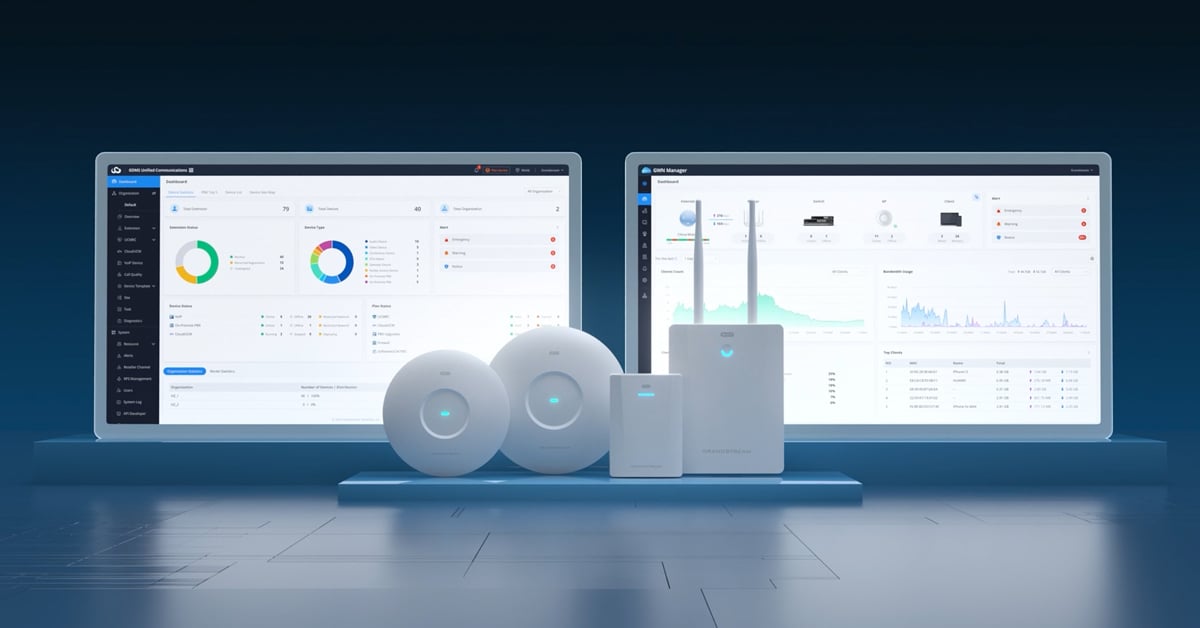
MLO enables compatible devices to transmit and receive data across multiple bands simultaneously. Aggregate throughput increases for video streams, cloud communications, and real-time applications. Using multiple bands also reduces the effects of interference and latency in dense environments such as airports, trade shows, and stadiums. Clients can automatically select the least congested bands without losing connectivity, and Mesh networks benefit from higher-performance backhaul links.
4K-QAM
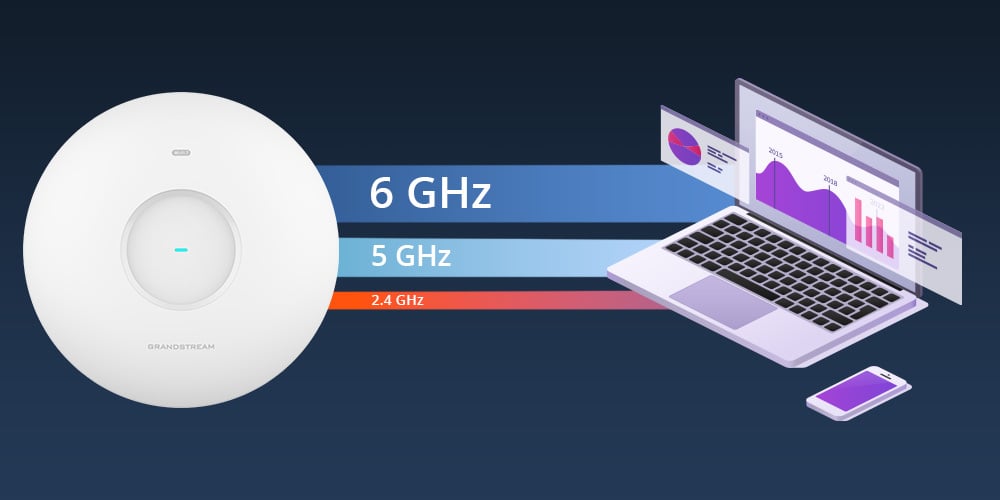
4095-QAM modulation, or 4K-QAM, replaces Wi-Fi 6/6E’s 1024-QAM. Each encoded symbol can carry 12 bits instead of 10, providing about 20% more data per symbol in favorable radio conditions. The result is greater spectral efficiency and higher throughput for Wi-Fi 7 access points.
Enhanced OFDMA and MU-MIMO
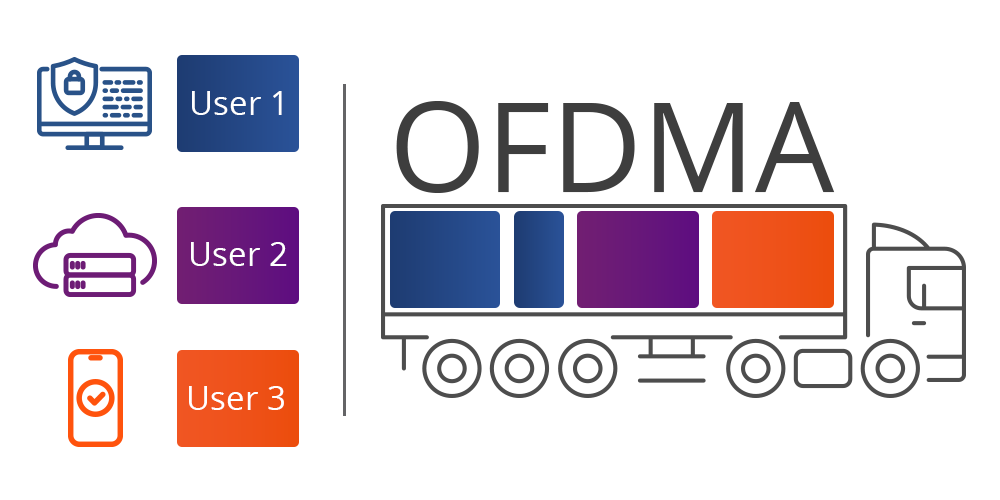
Wi-Fi 7 enhances two features introduced with Wi-Fi 6. OFDMA divides radio resources into Resource Units, and Wi-Fi 7 can assign multiple units to a single client for more efficient spectrum use.
MU-MIMO allows multiple devices to respond to the access point simultaneously. The number of spatial streams increases to 16, improving efficiency and slightly reducing latency when many clients communicate at the same time.
320 MHz channels
The 6 GHz band doubles channel width from 160 to 320 MHz. The GWN7674, a tri-band Wi-Fi 7 access point, demonstrates the value of this very wide channel: combined with MLO, 4K-QAM, and enhanced OFDMA/MU-MIMO, it increases throughput and reduces latency for video, cloud services, and heavily used home or business networks.
When should you use Wi-Fi 7?
Wi-Fi 7 is a future-ready investment even if not all clients support it yet. Offices that rely on video conferencing and cloud collaboration, studios that transfer large media files, and industrial sites using IoT and robotics can benefit from its capacity, density, and multi-link failover mechanism.
Learn more by exploring the local Wi-Fi 7 access point range and related Grandstream resources.