
The GCC series brings IP PBX, VPN routing, firewall security, and networking together in one device. This convergence makes features once reserved for large enterprises accessible, with administration through the web interface or GDMS.
GCC solution overview
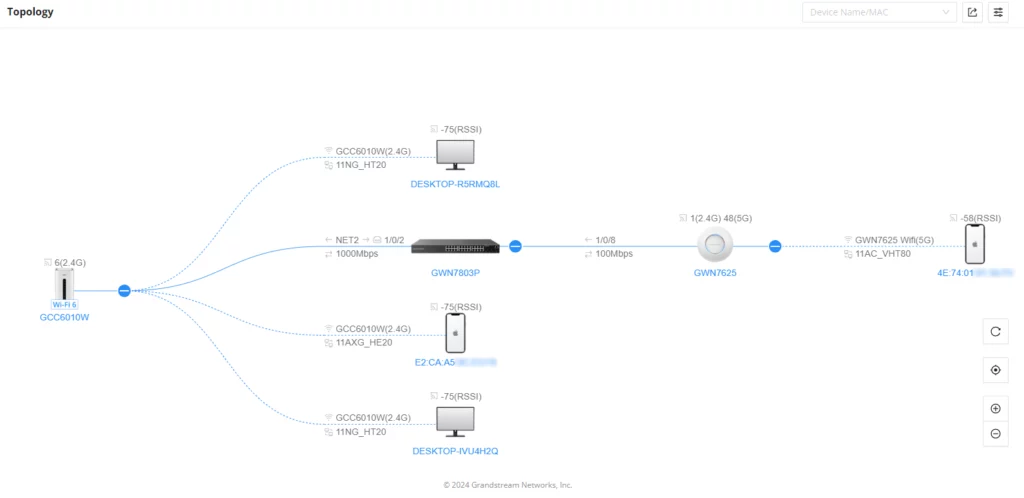
A GCC can be deployed in a small or medium-sized infrastructure and combines four modules: networking, firewall, network nodes, and IP PBX. The topology provides a view of connected devices, while system scheduling, user management, and email alerts can be configured before commissioning.
Networking module
The networking module covers WAN/LAN settings, VLANs, VPNs, routing policies, QoS, and bandwidth limiting.
Network settings
Gigabit Ethernet and SFP ports can be configured for speed, duplex, flow control, and LAN or WAN role. PoE models also allow port power settings. The WAN submenu supports static IPv4 and IPv6 addresses and connection to a DSL modem.
VLAN
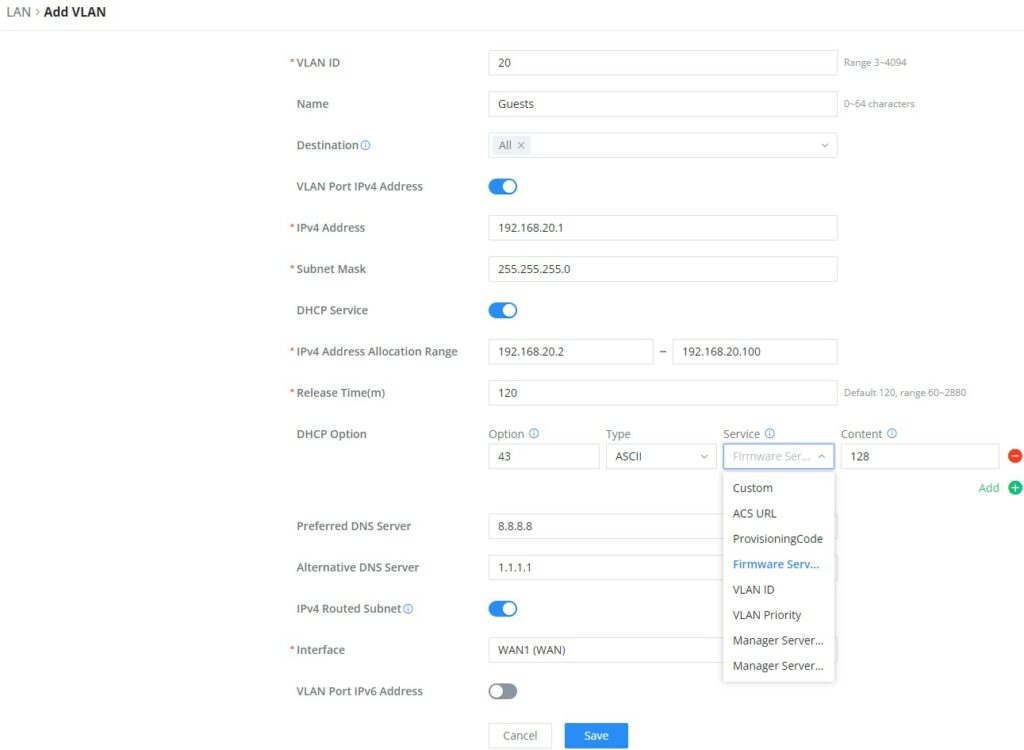
VLANs group and isolate endpoints as if they belonged to the same broadcast domain, even when distributed across different switches. Assigning VLANs to ports makes it possible to segment voice, data, and guest traffic and strengthen security.
VPN
- PPTP: client and server.
- IPSec: site-to-site and client-to-site.
- OpenVPN: client and server.
- L2TP: client.
- WireGuard: server.
Policy-based routing and load balancing
Policies can balance or fail over traffic across multiple WAN ports and finely control VLAN traffic. Static routing can be configured manually.
Quality of service (QoS)
QoS prioritizes traffic between WAN and LAN hosts. Priority classes allocate downstream and upstream bandwidth percentages among applications, with rules by IP and port.
Bandwidth limiting
Upstream and downstream rate limits can be applied to IP addresses, MAC addresses, or address ranges, with an activation schedule.
Network nodes
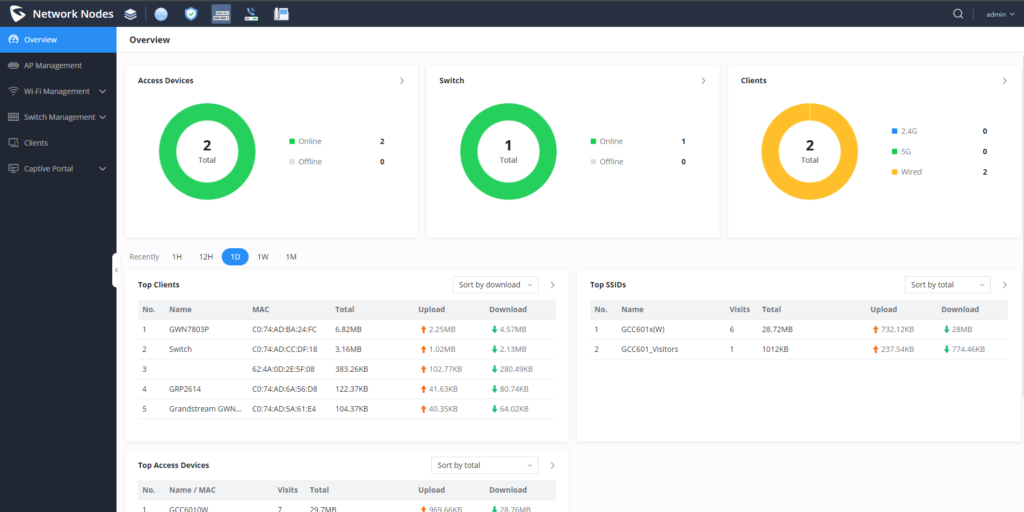
The node view shows the status, performance, and security of switches, access points, and other interconnected components.
GWN access point management
GWN access points can be configured through GDMS or directly from the GCC’s built-in controller. The administrator can configure, update, delete, reboot, transfer, associate an SSID with, and locate an access point.
Wi-Fi management
SSIDs, private keys, radios, Mesh, and blocklists are customizable. An SSID can be associated with a VLAN, protected by a captive portal, and scheduled by time. Band Steering, Airtime Fairness, channel width, and radio power complete the settings.
Switch management
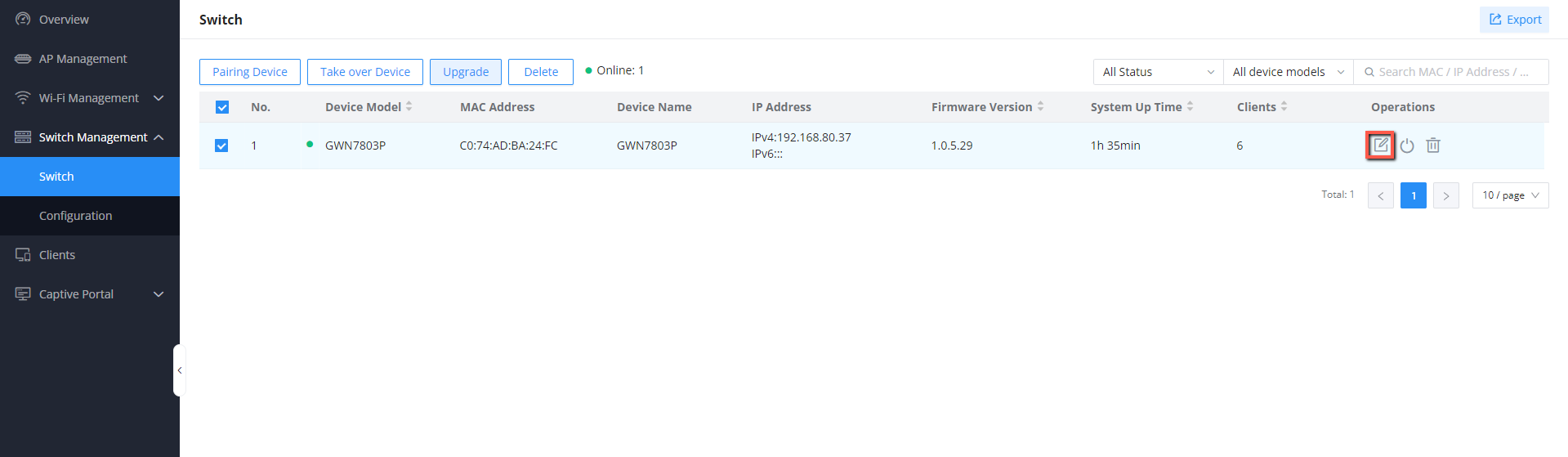
GWN switches can be configured, monitored, and optimized from the GCC controller. Individual and global settings cover VLAN, IPv4, RADIUS, IGMP/MLD snooping, jumbo frames, and port profiles: speed, native VLAN, duplex, isolation, storm control, and security.
Client customization and management
The Clients page lists connected or previously connected endpoints with their MAC/IP addresses, duration, and upload and download volumes. The administrator can limit bandwidth, schedule these limits, change the VLAN, and assign a static IP.
Captive portal
The captive portal displays a landing page before Internet access and offers customization options suited to Wi-Fi deployments.
Firewall
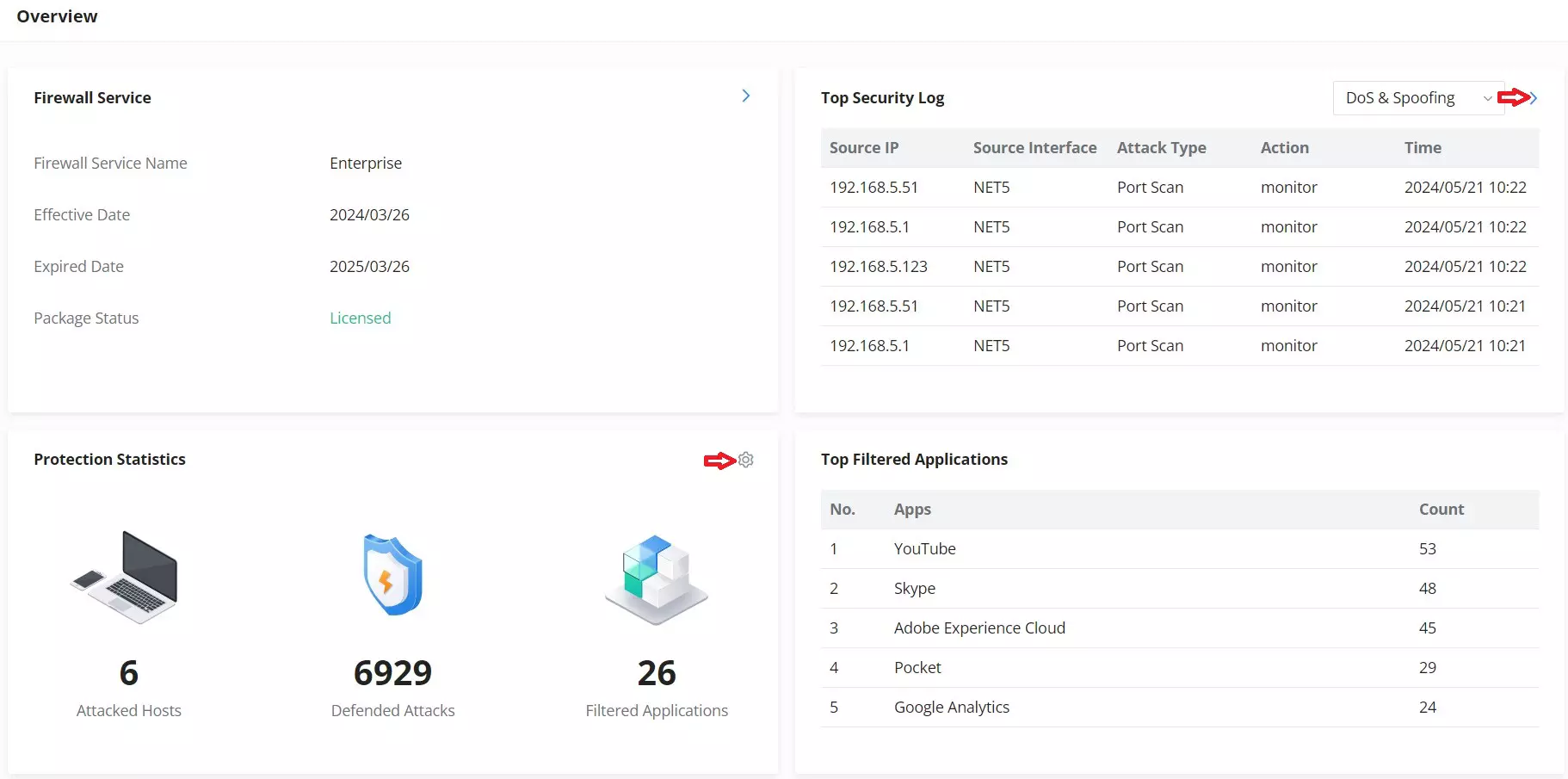
The GCC firewall protects the infrastructure against internal and external threats through traffic rules, DoS defense, anti-malware, intrusion prevention, and content control.
Firewall policy
Inbound rules can accept, reject, or drop traffic destined for network groups or WAN ports. Forwarding rules link WAN, VLAN, and VPN groups, and advanced NAT translation supports SNAT and DNAT.
Defense and anti-malware
Defenses against UDP, ICMP, and ACK floods, abnormal packets, and spoofing can be configured with thresholds. Anti-malware offers three scanning depths and an updatable signature library.
Intrusion prevention
IDS and IPS analyze traffic and logs to detect suspicious behavior and block or mitigate attacks in real time.
Content control
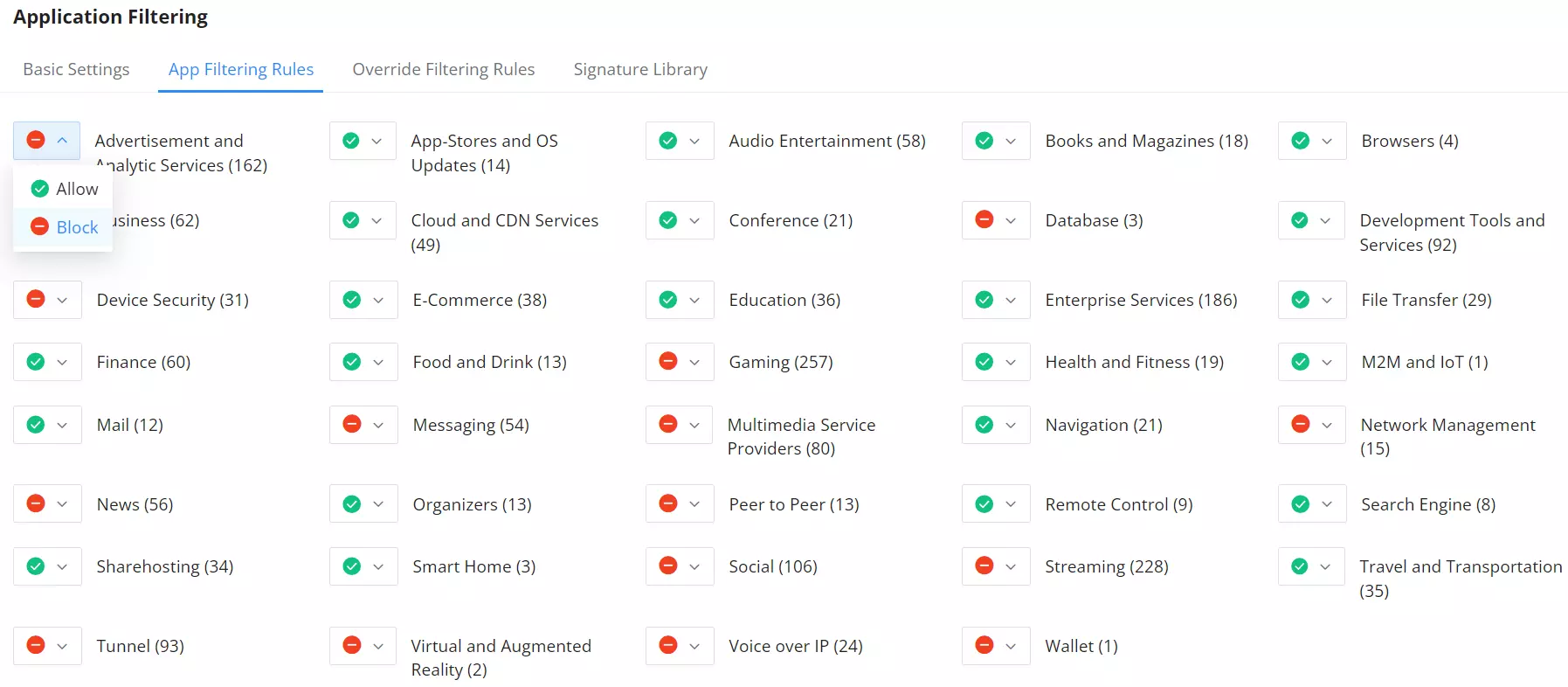
DNS, URL, keyword, and application filters block unwanted websites, categories, file-transfer services, social networks, or applications.
IP PBX
The IP PBX module covers extensions and trunks, groups, inbound and outbound routes, IVR, voicemail, call center, ring groups, paging, and intercom. An extension and add-on modules can increase the number of users and concurrent calls.
Learn more about GCC convergence devices
The GCC6000 series provides a complete infrastructure for SMBs and vertical deployments. The GCC Demo Tool lets you explore the interface interactively. For a deployment, the sales team and local distributors can help with sizing.
